Monday, October 25, 2010

DreamSpell Nightmares


It goes without saying that one of the greatest thrills of writing is being published. One of my stories, Bear Essentials, will be appearing in an anthology called Dreamspell Nightmares, published by L&LDreamspell, a Texas publishing company. If you like scare stories, you are going to love this book. Visit their site at:

http:www.lldreamspell.com/Anthologies.htm

Wednesday, October 13, 2010

Startling Results of Harris Poll


Publishers Weekly has published the results of a new Harris Poll that concluded that mysteries, thrillers, and crime novels have edged out the chic-lit and romance novels by a large margin.

Reader preference is divided disproportionately among crime, mystery, and thriller novels (48%), science fiction (26%), ‘literature’ (24%), romance (21%), graphic novels (11%), chick-lit (8%), with western books trailing the list with 5% of the market.

You can follow the title link above to read the entire article at Publisher’s Weekly.

Monday, October 11, 2010

An interview on Susan Whitfield's blog!


I was pleased when Susan Whitfield invited me to her blog for an interview. Susan is not only a talented novelist, she is knowledgeable about the craft of writing, and has created a site that is entertaining, inspirational, and informative. Click on the title above to read her interview concerning my two most recent novels. While you are there, take the time to look around for some other interesting information.

Monday, October 4, 2010

Love thy antagonist as you love yourself!

I read a lot of mystery and suspense novels. Authors ruin many of them for failing to develop their antagonist in a manner that makes their downfall gratifying to the reader. Sometimes we don’t even know the name of the murdered. When we do, it turns out to be some throwaway character that hasn’t touched us in a meaningful way. We turn the last page, stretch and yawn and feel vaguely dissatisfied without know why. Murders, bank robbers, and terrorists aren’t supposed to be likeable, you’re probably thinking. Well . . . maybe and maybe not.

Mistake number one is inviting some unknown character into your plot. You don’t know very much about him, and neither does the reader after they’ve finished your book. We know he is bad because his appearance is out of kilter. He looks nothing like the people we want as our friends, and we certainly wouldn’t invite him to a dinner party. He might be too handsome for his own good, and therefore mistreats the women in his life. He might be unattractive, with all of the prerequisite snarls, sneers, and grimaces. He might use the f-word, or one of the many b-words. No one likes him, and we aren’t going to like him either.

Ask yourself this question while you’re stirring up your next batch of characters. Who is the most frightening; the unknown guy who lifted a finger at you in traffic this morning, or the live-in boyfriend who left those marks on your best friend’s pretty face? What about your supervisor’s son who likes your dress a little too much. Ahhh, you say. Now you’re getting personal. Of course I am, and that is the major element that makes a story hang together in a suspenseful manner. The devil we know is a lot more frightening than the devil we don’t.

What makes someone intensely frightening to me? He or she must have some ‘in your face’ characteristic that makes it impossible to avoid them. They must have some logical connection with my main character in a way that is going to bring about a major collision. At some point in the story, I must become the main character and feel what he or she feels. I must have that feeling that they are going to tangle their fingers in my hair at the wrong moment, go after my bank account, attack some family member, or otherwise damage me in at some indefensible manner. And the most telling point of all is the fact that I must feel somewhat guilty in defending myself. The villain must be more – much more – than a faceless thing. In our heart-of-hearts there is no problem in taking a golf club and pounding a ‘thing’ until it becomes a mound of dead flesh. The really great novels are little more than morality plays where otherwise loveable characters run amok. Don’t make your character curse at me; instead give me a reason to slap the helping hand aside that he extends in my direction. You need to know what he is doing, or thinking about doing, and it must keep you awake well into the night . . .

Tuesday, September 28, 2010

The Pillars of the Earth by Ken Follett


I have a large stack of yet to be read books that friends have passed along to me. All of them are good, but if I spent all of my waking hours reading, I would never catch up, nor would I get any writing done.

When a family member passed along a copy of The Pillars of the Earth, by Ken Follett, I was delighted until I picked the book up and weighed it in my hand. I like books that end around 300 pages or less, but 973 pages are a bit too much. I complained to a friend and he said he did not blame me for not wanting to read a book of that length, but he did urge me to read the first couple of chapters. Just to get the ‘feel’ of it, he said. “Someone could have put out a condensed version,” I complained. “Check Cliff’s Notes,” he suggested.

Because of my friend’s good literary taste, I decided I would read a few pages. I didn’t have to read all the way to the end of the first chapter before I became hooked. I have always been a fan of Ken Follett, and I think this book is definitely his best. It makes the history of England under Norman rule come to life in a way that no other book has. It is absorbing, exciting, and informative. You can’t ask much more than that.

When I told my friend that I had finished the book, he asked me if I still thought it should be condensed.

Well . . . I began, not sure how I should reply. “Which sentence would you leave out,” he wanted to know.

I couldn’t think of one.

[I received my copy of The Pillars of the Earth as a gift from a family member.]

Sunday, September 26, 2010

Who Owns the Zebra?


Several years ago we received twelve inches of snow and a freezing rain on top of that. A friend had given me a puzzle called, Who Owns the Zebra. I spent the entire afternoon trying to solve the puzzle and finally did after using up most of a notepad. While this blog is usually devoted to subjects that touch on the writing process, it is good to occasionally spend a little time doing nothing, or next to nothing. You aren't suppose to cheat by looking up the answer on the Internet. I'll give you a few days to work on this before I post the answer.


Who owns the Zebra?

The following puzzle is a fine example of what is called a
“detective puzzle:” Based on clues supplied in a narrative, one is to answer a question by applying simple, man-on-the-street logic to the information (not all of it relevant) supplied.
On an odd little street in the town of “Somewhere”, there are five house in a row. Each house is a different color, each is inhabited by a woman of different nationality, and the owner of the houses also have their differences: each owner has a different pet, prefers a different drink and works in a different profession. A detective, charged with the task of discovering who drinks water and who owns the Zebra, gathered the following information, itemized for your convenience:

1. The Englishwoman lives in the red house.
2. The Spaniard owns a dog.
3. Coffee is drunk in the green house
4. The Ukrainian drinks tea.
5. The green house is immediately to the right of the Ivory house.
6. The engineer owns the snail.
7. The diplomat lives in the yellow house.
8. Milk is drunk in the middle house.
9. The Norwegian lives in the first house on the left.
10. The doctor lives next to the owner of the fox.
11. The diplomat lives next to the owner of the horse.
12. The teacher drinks orange juice.
13. The carpenter is Japanese.
14. The Norwegian lives next to the blue house.

Who owns the Zebra?

Thursday, September 16, 2010

Conflict In Fiction


It cannot be said often enough that plot is a verb. If a novel is to convey a story worth telling, it must move forward in a conflicted manner until it reaches a logical and satisfying conclusion. It is sometimes astonishing how little ‘action’ there is in literary fiction, even though the author might keep a firm grip on our throat all the way to a gut-wrenching conclusion. The most effective conflict in a story is what happens emotionally to the protagonist or to those he cares about. It doesn’t have to involve slashing, shooting, or hanging.

Conflict takes many forms depending on what type of story you are writing. In romance or young adult fiction, the conflict is often more subtitle, involving the relationship between the two main characters. In a suspense or thriller novel, the conflict will be more violent in nature, but it is most effective when the life-changing impact of the violence carries the story along. The most important factor in plotting your story is considering what your readership expects in that particular genre.

In a novel I read recently, the murder did not take center stage, nor were the details presented in graphic detail. The most moving scene involved the victim’s family at the funeral home trying to comfort each other, while seeking ways to pick up their lives and move on. The detail that made the scent so gripping was the suspicion that the husband’s carefully controlled emotions might boil over at some later date.

Regardless of the type of story you are writing, make me feel your pain rather than just presenting violence and mayhem in the manner of a crime scene report. Do it in the right way and I will come back to read what you have written again and again.

Saturday, August 21, 2010

The Right Atmosphere

One of the most time-consuming tasks in the writing process is research. Writers are advised to ‘write what you know,’ which is excellent advice, but even writing about those things with which we are familiar doesn’t free us from having to check each fact multiple times. Suppose, for example, that you grew up on a farm in Arkansas during the 1970s, and you want to recapture that era in a bestselling novel. You might suppose that if you create a story that is somewhat autobiographical you are completely safe, and no research will be required. Your novel is going to involve a ‘coming of age’ story, told through the eyes of a fifteen-year-old high school student. You can’t wait to get started, and you sit down in front of your computer and glance at your notes. You will probably make it fine until you get to the third paragraph. What kind of car did your family own? It was the one you learned to drive, but you need a few details to make it seem real in the mind of the reader. Just saying it was a big green car won’t get it in the eyes of your editor or in the mind of your reader. There was something magical about that first car you drove. It was probably where you got your first kiss, spilled a soft drink in the seat and received a chewing out from your father. You probably did other things we won’t discuss here. Why are such details so important? These are the details that create the ‘atmosphere’ of your story. Skillfully applied, you don’t notice details as individual elements that impinge your senses. You only know that you are there in the story and you say to yourself, that’s how it must have been. Details, details, and more details, is how you get the job done.

I am now reading ‘The Pillars of the Earth’ by Ken Follett. Follett begins the prologue by giving us the date, which is 1123, and then the opening sentence is, ‘The two small boys came early to the hanging.’ Then he very carefully launches into their behavior, the sights and sounds of the scene he has created. You can hear it, you can fell it, you can smell the world that Follett has created. After reading his first sentence you can’t lay the book down -- you won’t lay the book down! Which reminds me, I have to get back to my reading . . .

Saturday, July 10, 2010

New Book Trailer on YouTube

I really enjoy fooling around with graphics. One of the first things readers ask is what your book is about. It is a challenge to try to discover new ways to explain this. I have a new book trailer on YouTube. I hope you will take a minute to view Abraham’s Bones.

Saturday, June 26, 2010

Gift Horses and other Assorted Annoyances


There is an old adage from a bygone era that admonishes us to ‘never look a gift horse in the mouth.’ For those who are too young to know the meaning of this expression, it was the horse and buggy equivalent of a Carfax. There are a lot of free ‘horses’ and assorted software out there on the Internet, but you’re likely to get more than you bargain for if you download them. Recently, I downloaded a program I needed and acquired a little ‘gift’ called Weather Bug. It does what the name implies, but you aren’t likely to like the ‘bug’ part that gallops uninvited into your system. Weather Bug contains adware and is anathema to anyone doing serious research. Right in the middle of your search for some elusive fact you need for your story, an advertisement is likely to pop up and try to sell you something you don’t want. I’ve spent far too much time in the past week trying to uninstall Weather Bug. Nothing works. It is still there and the adware seems to be working overtime. Few of the ads have a cancel button, and I have to exit Explorer in order to get access to my screen again. I don’t know how you feel about aggressive ads, but I wouldn’t accept a new BMW if it came to me via adware. There are a lot of merchandisers on the Internet who need to grow up. There is a subtle difference between a product offer and badgering. Few of these people seen to know the difference. Weather Bug, please go away.

Wednesday, June 23, 2010

I'm Furious!

I’m a laid-back guy. I usually don’t want people to know that, because in another life, I took part in all kinds of active and dangerous sports. Too much knowledge hurts the image I’m trying to carry over into my post-retirement years. Last night before going to bed, I put the finishing touches on a 270 page manuscript. My sigh of contentment when I finished would have melted the heart of the most hardened Wall Street banker. After breakfast this morning, I fired up my new computer and was not pleased to find that my perfectly formatted manuscript had been transmogrified into what is apparently Mandarin. While I’ve never thought of myself as being self-centered, this manuscript is my own creation and I do not want it in Mandarin. Fortunately, I make a new file of each days work and will only have to go back a day to two to find a pristine copy that is properly formatted and in English. Major decisions about any computer related action usually involves, ‘are you sure you want to . . .’ You would think that the genius who put language translation abilities into a word processor would have the forethought to do the same. Perhaps I involuntarily touched some icon and this happened . . . But now I’m having second thoughts. My favorite food is Chinese and I eat often in one of the four Chinese restaurants in my area. I’m a good tipper, but I’m going to slip out to my shop and saw the handle out of my shovel, then sharpen it into a spear with my hatchet. If I find one of those little dudes hiding under my bed or in the closet, I’m going to . . . Well, you’ll read about it in the paper. Murder, anyone?

Wednesday, June 2, 2010

Being Negative About Negativity


The world is full of negative people. Some of you wouldn’t have known that if I hadn’t pointed it out to you. I can let most negativity pass by without allowing any of my feathers to lift, but sometimes it really bothers me, especially when I encounter it on writer’s forums. One forum, where I am the resident lurker, has many ‘experts’ who seem to know everything on every subject, and they are quick to point out the dangers in trying something new. One young woman was making her first attempt at poetry. They gave her the same advice you would give an adolescent if they were picking at a zit. They are especially bothered by anyone who attempts to do things where they don’t have the necessary expertise. Most of the ‘right stuff’ apparently consist of an MFA, a diploma from an art school, computer engineering, or whatever. If some amateur suggests that they might ─ just might ─ attempt something new, then the little hatchets come out and they chop at the neophytes ego until he/she is whittled down to size. During a recent discussion that skirted the boundaries of a first class flame war, I held my tongue. After the shouting was over, decided I would attempt to do what this particular writer was warned away from doing.

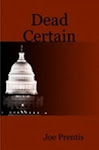
“No writer should attempt to design the interior of a book, and they should certainly never attempt to produce a book cover,” the sages said. I disagree rather strongly. I am in the process of revising a previously published book. Here is my first draft of the new cover I managed to produce with a software program I had never used before, in just over three hours. Not bad for a first attempt. Oh, and another thing. The next person who says you can’t do it, it’s too hard, you are too stupid - yada, yada, yada . . . You have my permission to stick your thumb in their eye. How did the ‘experts’ become experts at what they do? Some of them will imply that they were born that way, or that someone popped out of Nirvana and placed a hand on their shoulder. I’ll bet you that most of them just sat down and started to work. Don’t give up on your next story and don’t give up on designing your next book. Keep working on your dream until it has the feeling and texture of a well worn dishcloth. Whatever you want to do, just go out and do it. Why? Because I said you could.