Friday, January 23, 2009

Laughing Jesus


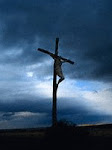
Early in life, I was a lot like Scaramouche, who described himself as ‘having a gift of laughter and feeling that the world was mad.’ The realities of life and some very difficult jobs caused me to become too serious and prone to look at things in an analytical way. Then I discovered a very good antidote to such foolishness. I was brought down by Cancer. When your world shrinks to the size of a hospital bed, you have a tendency to look at things differently. Recently, some members of a forum were speculating on the most precious substance on earth. Diamonds, sapphires, and rubies were mentioned, but I think laughter has all of them beat. There are pictures by several artists called ‘Laughing Jesus.’ When I saw one of them for the first time, I was startled. Then I came to realize that Jesus did laugh despite the traditional art through the ages that depict him as very solemn and mournful. There are many verses in the scripture where we see examples of His humor. For those of you who disagree and think that God did not have a sense of humor, just wait a few years and go look in the mirror.

Sunday, January 4, 2009

WINTER'S GRIP


The person who decided to schedule the first day of the year in the dead of winter knew exactly what he was doing. There is an undeniable beauty to the winter season, but there is something about the short days and dark clouds that depress me. The shortest day of the year usually falls on December twenty-first, and then they start, slowly and agonizingly, to get longer. The tiny increase in the amount of sunlight over the next two weeks causes magical things to happen. The first buds appear on sheltered trees, and hearty sprigs of winter grass poke through the dead leaves in the forest. I am not a poet but there is something about the impending miracles of spring that tempt me to try my hand at writing just a few verses. Something, perhaps, that would describe the beauty of the first buttercup spears, the song of a Robin perched on top of a gatepost, or the distinctive smell of the slowly warming earth. Nature has a remarkable patience that poets have commented on for untold centuries─ but I am patient, too, and I shall watch and I shall wait . . .

Saturday, December 6, 2008

A SCARY STORY AND A DARK MOONLESS NIGHT -- CAN THINGS GET ANY BETTER?


While I like many different types of literature, there is a special appeal to scary stories that carry us back to our youth. All of us have pleasant memories of campfires and the inevitable snap of breaking branches in the darkened woods that scared the liver out of us. You don't have to have a campfire, and a dark night is not obligatory, although it helps to set the mood. Quiet is one of those books you have been looking for, filled with tales that will make the hair lift along the nape of your neck. Oh, and another thing I forgot to mention. Make sure you are sitting in an over-sized chair when you read some of the stories in this one. You really don't want your feet dangling down there where you can't watch them. You never know what is hiding in the dark corners or underneath the bed. Don't say I didn't warn you. Click on this link and it will carry you to a place where you can order your copy.

Friday, November 7, 2008

SHORT STORY, ANYONE?


In the last few years, many magazines have stopped carrying short stories. Years ago, when I was growing up, postage was cheap and most families subscribed to several magazines. I remember waiting expectantly for the mail to arrive, anxious to take part in the latest adventure. Now that the Internet is available in almost every home, short stories are making a comeback. There are many sites where you can download stories for a fee, but many others where you can read to your heart's content at no cost. One of the free sites is Author's Den, which has over 1.4 million visitors per month. Click on this LINK and it will carry you to my latest story. I hope you enjoy reading it.

Monday, October 27, 2008

EDITING -- GETTING IT RIGHT THE FIRST TIME.

.
All writers have problems with editing. The process involves going over sentences and paragraphs until we almost have them memorized. While this repetitive process has its rewards, there is also a downside. The more familiar the material becomes, the easier it is to overlook the omission of short words or the transposing of letters. Children, who learned to read with a strong emphasis on phonics, tend to see every letter in a word. The rest of us tend to recognize words in the same manner we recognize any other object. Words to us are pictures and the transposing of one or two letters might go unnoticed. In a recent study, Cambridge University offered the following paragraph as an example.

Cna yuo raed tihs? Olny 55 plepoe out of 100 can.

I cdnuolt blveiee taht I cluod aulacity uesdnatnrd waht I was rdanieg. The phaonmneal pweor of the hmuan mnid, aoccdrnig to a rscheearch at Cmabrigde Uinervtisy, it dseno’t mtaetr in waht oerdr the ltteres in a wrod are, the olny iproamtnt tihng is taht the frsit and lsat ltteer be in the rghit pclae. The rset can be a taotl mses and you can sitll raed it whotuit a pboerlm. Tihs is bcaueae the huamn mnid deos not raed ervey lteter by istlef, but the wrod as a wlohe. Azanmig huh? yaeh and I awlyas tghuhot slpeling was imphorant!

Wednesday, October 22, 2008

ART OR VANDALISM? I'LL LET YOU DECIDE.

I was in a restaurant near Mount Vernon several years ago. In a roped-off section near the entrance was a table with the initials G.W. carved deeply into the wood. A sign explained that this was George Washington’s initials, carved by him when he was a young surveyor.

There is a fine line between art, graffiti, and vandalism, and it is not always easy to know one from the other. Defacing public or private property is always wrong and should be discouraged, but there are occasions where there is an unmistakable beauty to some graffiti. I discovered the wonder of it while traveling around in different areas of the country.

Passing a park in a small town, I saw something from the corner of my eye I could not immediately identify. I turned around and went back. There was a rectangle of bright green grass where someone had used liquid fertilizer to write the name, Molly. The grass was taller and greener than the surrounding vegetation and was clearly visible from a long distance. I can imagine the school bus Molly rode each morning passed that way. Was the artist someone Molly knew, or was this the work of some shy young man who desperately wanted to know her?

In another town, I stopped at the approach to a newly constructed bridge. In carefully worded script were the words, Thad Is a Dork! Whoever wrote that one spent many hours with brush and paint, carefully inscribing her thoughts with loving care. I have a feeling she really didn’t really think of the him in that way, and I hope Thad was bright enough to know the difference.

I think every town should erect a sign or designate an area where teens can inscribe the names of the one they are dating, or hope to date. It is infinitely important that John loves Heather, or that Frank is MAD about Tiffany. I think it is important that you and I know that too.

The very best to John, Heather, Frank, Tiffany, and to Thad— even though he is a dork— and to the young woman who cared enough to tell him.

Wednesday, October 15, 2008

MAKING SENSE OUT OF HISTORY


WHO ARE WE?

Most of us have memories of sitting through long sessions in high school history classes. We remember how our eyes became heavy as our teacher droned endlessly on about places and things that held no interest for us. After suffering through the mandatory requirement to graduate, we silently vowed never to let this happen again. History doesn't have to be dull if we approach it in the right manner. Unless we understand something about the vast sweep of human history, we will never understand ourselves. We are the product of all that went before us. History is exciting, and I will prove it to you if you will set up a little straighter in your chair and take a journey with me. Are you ready? Then here we go.

Most of us are familiar with the term, DNA. It first came to the attention of most of us during the O.J. Simpson trial a few years ago. Today, the use of DNA in criminal investigations has become routine, and it frequently plays a part in determining the outcome of paternity cases. A minute sample of genetic material can identify the parents of a child with certainty. The exciting thing about DNA testing is the fact that it can not only identify our parents, it can also identify our ethnic heritage, plus a lot of other things. A scientist can take a sample of DNA and project backward in time, identifying the groups of people from which we descended. Collecting genetic samples at archaeological sites has become routine in the last few years. This allows them to identify and chart the movement of people across the face of the ancient world. Scientists have proven that every person is a descendant of one man who lived in northern Africa 60,000 years ago. From that humble beginning, the human race quickly spread across the face of the earth. Then at some indeterminate point in time, a catastrophic event almost annihilated the human race. By studying DNA taken from the remains of some very ancient skeletons, scientists determined that less than two thousand persons survived this event, although they are not willing to hazard a guess at the exact number. I have a feeling there was no more than a boatload of hardy individuals who survived.

Eventually, the human race began to multiply again. They spread across Europe and into Africa, Asia, and the islands surrounding them. Then, they started to spread to all of the other land areas. They crossed to the Islands off the continent of Asia, then to Australia, Hawaii, and across three thousand miles of open sea to Tahiti. One group migrated around the cost of China, bypassed Japan, and up the coast to the Aleutian Islands. They eventually arrived at the Pacific coast of North America. We call this group Native Americans.

Mankind has always been restless, inventive, and adventuresome. It was rather astonishing when a team of archaeologists dug into a grave in Oregon and discovered a skeleton much older than the group known as Native Americans. When they ran DNA test, they discovered this was the remains of a Caucasian person of European descent. Then they found a skeleton of another Caucasian in Illinois, and then two others in a dig in South Carolina. Some of the tools found in South Carolina suggests they were related to the people who drew the cave drawings of prehistoric animals in France.

If DNA can tell us something about our beginning, then it becomes natural to ask the question: Who are we? Why do I have a medium build, brown hair, and blue eyes, while my neighbor is six foot tall and outweighs me by thirty pounds? This is something we can actually blame on our parents, and all of those who came before us. DNA is a tiny ribbon of genetic material present in each cell of our body. It is smaller than a dust mote floating in a beam of sunlight. If you were to unfold this ribbon of material, it would be approximately fifteen feet in length, but only three atoms wide. This miraculous substance contains the codes that determine our psychical characteristics. It contains a complete blueprint of our body. Think of DNA as being like a long array of electronic circuitry with many billions of switches along its length. Some of them are flipped on and others are flipped off. The switches flipped on are the ones that control our appearance and other physical characteristics. The genetic switches flipped to the off position don't perform any function, but we still pass them on to our descendants. This is the reason you do not look exactly like your brother or your sister, and the reason your child might have your great-grandfather's red hair, even though no one else in your generation has red hair.

Who are the people in our family tree? Most of the history of the human race has been lost. Some historical accounts are of doubtful value, full of fables and inaccuracies. It is exciting that we have the science of DNA which can tell us something about human history. When most of us think about family history, we only think about the people who passed our family name along to us. Everyone― even if they were adopted and never knew their birth parents― has two parents. In the next generation, there were four grandparents. Each generation has twice as many people as the previous one. A generation is about twenty-five years in length, with four generations in each 100 years. One hundred years before your birth date, you had 16 great-grandparents in that generation. Only one of them had your surname. Unless there was intermarriage, this is true of each generation. Two hundred years before your birth date, you had 256 grandparents in that generation. At the time the European nations were making their plans to colonize North America― which was about fifteen generations back― you had 32,768 grandparents alive on that date!

Labs that conduct DNA testing for genealogical purposes, can tell you which genetic group predominates your family tree. The first immigrant bearing your family name might have come from England in the middle of the sixteen hundreds. This person was English― but wait a minute! The Englishman of the 17th century was a mixture of Brythons, Anglo-Saxons, Danish Vikings, Bretons, Normans, and many others thrown in for good measure. Your ancestor's English surname was passed down to his descendants, but if your family located in a town predominately inhabited by some other ethnic group, then it is likely most of your 65,536 grandparents who lived since the middle sixteen hundreds, were not English. This brings us back to our original question. Who are you? The next time you pass through a kitchen and someone is baking a cake, look in the mixing bowl and see is you can find the vanilla. We are an astonishing mixture of races and nationalities― we are everyone, but most important, we are uniquely ourselves.

NEXT UP: WHERE DID WE COME FROM?

Wednesday, September 3, 2008

HAND OF HOPE

The picture accompanying this article has been circulating on the Internet, but I had not seen it until my sister brought it to my attention. I immediately contacted the photographer, Michael Clancy, and received permission to use it on my website.


The child in the photograph is Samuel Alexander Armas, and he was diagnosed with spina bifida. At 21 weeks old, he could not live if removed from his mother's womb. Dr. Joseph Bruner, practicing at Vanderbilt University Medical Center in Nashville, rose to the challenge. He performs these difficult operations while the baby is still in the womb. The procedure involves removing the uterus via C-section, and then the small incision you can see in the photograph is required to reach the fetus.


Dr. Bruner has performed many similar operations, but as he completed the surgery on Samuel, something unusual happened. Samuel reached his tiny, but fully developed hand, through the incision and grasped the doctor's finger. Doctor Bruner is reported to have said that when his finger was grasped, it was the most emotional moment of his life. The operation was successful and Samuel was born healthy and perfectly normal.

At this point, you probably expect me to launch into a sermon or perhaps a rant concerning the many shades of gray that pro-life and pro-choice advocates have argued so eloquently. Instead, I would like you to take a moment and focus your attention of young Samuel's tiny hand, and see what this image says about hope, and trust, and the future.

Have a great life Samuel Alexander Armas. I have a feeling we are going to hear from you again.


If you would like to know more about Samuel’s story and Photographer Michael Clancy’s efforts to publicize this extraordinary event, you can follow this link. to justfacts.com.


.

Thursday, August 28, 2008

THE BLACK WHOLE

I have always loved short stories. I am convinced there can never be too many of them, just as there can never be too many Christmas mornings, or too many celebrations of the 4th of July. Most of us started our reading experience with children’s storybooks, usually in our preschool years. I have some of my favorite books in a well-guarded place, safe from little fingers that might dog-ear the pages, or the expectant ones who might want to borrow them. I can still feel the excitement I felt in that long ago era when I settled back in a chair to experience the magic of Sammy Jay, or Tom Cat, or the Brothers Grimm.

Short stories present a challenge to the writer, because they have all the elements of a television commercial. You have to get to the what, where, who and the why of it, in only a few words. I am honored to have two of my short stories appearing in an anthology from Down in the Country Press. The book is called The Black Whole, and it contains 25 stories that vary widely in subject matter. You will be sure to find several of them to suit your mood, and you might want to move your chair while you read in case you need to turn the lights up again. Be sure to have a box of Kleenex handy, and tennis shoes aren’t a bad idea in case you feel the need to run. I have read halfway through the book and I think I will read just one more story before I go to bed. But before I get started on the next story, I think I will check my window. It sounds as if something is pecking on the glass . . . .

The Black Whole anthology is available from the publisher, from Amazon, Barnes & Nobel, and other on-line book stores.

Don't miss this review of the Black Whole at Bookzombie!

Tuesday, August 12, 2008

Book Trailers - What's it all about?


If you have been in Outer Mongolia for the last few years, you might not recognize the term, Book Trailer. A book trailer is very similar to the previews of upcoming movies you are accustomed to seeing on television or at the theatre. They are short ─ most of them lasting no more than a minute ─ but they tell you a little more about the story than you can learn by looking at the picture on the front cover, or reading the blurb on the back of the book. Click on this link and watch the Trailer of my suspense novel Dead Certain.

Tuesday, July 29, 2008

FLASH FICTION

For many years, editors have requested manuscripts that tell a complete story, but do it succinctly. The development of computer drives with many gigabytes of storage makes it possible for us to store large amounts of text efficiently and cheaply, but it has caused many of us to develop some bad writing habits. Our novels have become longer, more expensive to print, but not necessarily better. Recently, I joined a group writing Flash Fiction. I had a brief idea of what this involved. A story of this type is ideally only five hundred words in length. I knew that, but I did not know how hard it was to gather all of the elements of a story together into a coherent pattern. Then I ran across a short anecdote about Ernest Hemingway that was rather amusing. According to the story, he made a bar bet that he could write the shortest story on earth. His contribution consisted of only six words, and it is definitely a complete story.

“For sale: Baby shoes, never worn.”

I haven’t reached Hemingway’s proficiency yet, but I am working on it.

Sunday, July 6, 2008

READER'S DIGEST SELECT EDITIONS

When someone visits my office, their eyes always go to the top shelf of my bookcase where I have a long row of books from Reader’s Digest Select Editions displayed. For guests who aren’t familiar with Select Editions, it is probably the attractiveness of the books that catch their eye, but for others, it is almost like they are waking up on Christmas morning when they were a kid. I often hear, “I love to read, and I wonder if I could borrow just one . . .”

I always allow them to do so, because after a half century of reading almost all of the 800 novels the editors at Reader’s Digest have selected, I am still as excited as I was when I held that first edition in my hand. Many readers spend long hours in book stores trying to find something they haven’t read, while others depend on the New York Times Bestseller List. You might be surprised to learn that most of the books on the bestseller list also appear in Select Editions. If you love James Patterson, John Grisham, Nora Roberts, and all of the other great writers, you will find them there. I could go on for hours about this, but I am in the middle of one of the best novels I have read in a long time. The name of it is Iris and Ruby, and yes, it is in the current issue of Select Editions. You might want to check their website to see a complete list of the books Reader’s Digest has published since 1950. It is an astonishing list, but I need to get back to my book . . .

For more information visit the Select Editions blogsite at:

http://selecteditions.blogspot.com/

Joe Prentis