

Sunday, December 20, 2009

Logic 101


All writing, on some level or another, must make sense. Even if we are writing science fiction or fantasy, we must maintain a level of logic that doesn’t jar the mind too much, or the reader is likely to reject what we say. That is not to say that everything has to be proven in a scientific laboratory, but it must hold to the ‘rules’ that apply to the world we have created. One of my early encounters with reality was an exercise I wrote in a short story course which was supposed to show a simple incident where two people were doing something—it didn’t matter what—that gave the reader a glimpse of who they were, what they were doing, and where the story might go from there. I was going to play it safe and write something very simple. My writing coach gave me a ‘C-’ and said he did not believe it. The scene involved two men sitting at a small table in the outdoor section of a restaurant, drinking coffee. They sipped, enjoyed the fresh spring air, and heard the muted sounds of early morning traffic. How could you not believe that this could happen? Believability involves at least two things. It must flow from the characters in a way that is logical, and it must be what we (the reader) would expect them to do. This is not to say that we can’t have strange twist, but the reader needs to have an Aha! moment where he/she thinks, I should have seen that coming. Mark Twain made an interesting observation when he said, “It’s not what you don’t know that can come back to haunt your, it’s what you know for sure that ain’t true.”

Wednesday, December 16, 2009

What are they thinking?


WHAT ARE THEY THINKING?

Obscenity, vulgarity, and bad taste — do we really need it in our literature?

There is an astonishing amount of good literature available on the Internet, and a lot of it is free. I like to browse websites and blogs for some of the best of it. Recently, I found a well written story. The suspense and plotting was just about perfect, and I was anticipating a great ending—which came in the last line. I was not pleased, however, with some of the language in the story. Many of the sentences were augmented with four letter words, such as in ‘what the ****.’ I could have lived with one or two, but this occurred in almost every short paragraph. When I suggested that this did not add to the story, most of the other readers disagreed. Words like honest, descriptive, and true to life, popped up in their responses. My question to you is this: Are our readers intelligent enough they can get by without giving them a detailed description of all of our character’s body functions? If you are expecting a moral lesson in any of this, you are going to be disappointed. Morals, or the lack of them, is not the issue I am addressing here. It is simply a matter of looking at ‘honesty’ in a different way. Many blacksmiths, sailors, and construction workers have an ‘honest’ way of expressing themselves, and the rest of us know to move back a few feet when they become unspooled. From having read tens of thousands of books and stories, I have come to believe that the very mention of some human condition can convey all of the emotional flags we need to raise in a particular dramatic situation. As any editor can tell you, the correct word is what triggers human emotion or perception. The sprinkling of four letter words is the literary equivalent of using triple explanation marks at the end of a sentence — and you don’t want me to do that!!! Now do you!!!

Saturday, November 28, 2009

Writing Interesting Things


Writers need to write about interesting things. I hope you spend some of your time in research that might be useful in your next writing project. Writers should be inquisitive and this inquisitiveness should lead us to discover the unusual things around us. There are many books that are anything but interesting. Some of them contain well thought out plots that keep us turning the pages well into the night, yet we are unable to remember the story the next day. Dull stories have a way of falling out of our head as soon as we finish the last page. I love writing suspense stories, and in each of my books you are likely to learn something you didn’t know before. I try to incorporate interesting details into a story in such a way that it will make the reader anxious for more, but do so without detracting from the plot. Who would want to read The Great Gatsby if it didn’t contain the many thousands of details of what life was like among the super rich during Fitzgerald’s era? Tom Clancy pushed his novels to the top of the best seller list by letting us know where all of the buttons and switches are located on the latest super weapons. Here is one of the little items of information I ran across today in my endless quest for just one more item to place in my storehouse of trivia. I am surprised that someone hasn’t already used this in a movie. The young woman in this article is called a ‘wine angel.’ She is pulled up and down the side of a wine tower dressed in a catsuit, while suspended from a cable with a rock climbers harness. She locates the proper bottle of wine and carries it down to the customer. You can’t see the floor at the bottom of the tower, but the hero of your next novel might be seated there just waiting for you to motivate him.

Follow this link.

Sunday, November 8, 2009

Cartoons - Literature at its best!


I ran across an article a few days ago where the author was attempting to define literature and classify what he considered to be the best things ever written. I wasn’t surprised to see a large number of classic novels, a number of modern works from the New York Times Best Seller List, and some obscure novels like The Store. The Store never made any list, but did capture the Pulitzer Prize and break ground for things to come in the world of literature. I was a little shocked that the writer left out one of the best forms of literature around, or it used to be around, until cost-cutting did away with many of the daily newspapers. I’m referring to the comic section of the newspaper that was a part of our daily lives since the early part of the 20th century. I cannot remember a time when I didn’t read the comics, laugh over the funny ones, and wait anxiously to see what Luann, Nancy, or Dick Tracy might do next. Unless you live in or near a large metropolitan area, you no longer received a daily newspaper. You are, no doubt, suffering along with the rest of us, wondering what the gang in Peanuts is doing today. I was delighted when I discovered a website where all of my favorite comics are available on a daily basis. There are about one hundred comic strips on the site and it is free. You might want to add this website to your favorites. Click on the link below.

Daily Comics

Thursday, October 22, 2009

Great Children's Author


I read a wide variety of books, although my favorite type of literature is suspense. It is always a treat to pick up a book in another genre and find something stimulating and interesting. Sevetlana Kovalkova-McKenna is the author of several books for children. Her stories are the type of books you want to buy for your own kids. She studied Journalism and Broadcasting at Moscow State University in Russia, and has a liberal arts degree from Belmont University in Nashville, Tennessee. She is not only a writer with great talent, she is also an artist who illustrates her own books. After reading my review of Kaitlyn and the Secrets of the Sea, I hope you will add it to your Christmas list for your own children to enjoy.


Reading Kaitlyn and the Secrets of the Sea, carries me back to a magical time when my daughter was young and we spent time reading to each other. The story of Kaitlyn’s adventure under the sea is suited for preteen children, but those who are much younger will enjoy a parent or an older family member reading it to them. Sevetlana Kovalkova-McKenna weaves a magical spell for those who enjoy a modern fairytale. It is reminiscent of the classic stories of yesteryear, but suited for our modern world. The story elements are strong, the characters intriguing, and the lessons worth remembering. There are many of us who believe in magic, but you will wonder as you read this wonderful story, if the author knows something that has escaped the rest of us. I highly recommend this book.

This book is available at Amazon.com

Thursday, October 15, 2009

Child Abuse


Tags: child abuse, crime, thriller, mystery.

Statistical evidence reveals a shocking truth about America. Child abuse is at epidemic proportions and society seems unable, or unwilling, to do anything about it. Studies have suggested that one in four girls are sexually abused while they are growing up. Divorce, problems with our school systems, and absentee parents, makes the situation more difficult. There are far too many authority figures who prey upon our youth, while children find themselves powerless to resist. Child abuse is not a subject any of us are comfortable with, but it accomplishes nothing to bury our head in the sand and pretend it will go away. My latest novel, ‘Innocent’ is not the kind of book I would ordinarily read, and it is unlike anything I have written before. Some people might be disturbed by the content, while others will realize that the hard, cold wind of reality, will sometimes drive the smog away and clear the air.

Monday, October 12, 2009

Columbus Day


Tags: American history, Christopher Columbus, holidays.

Whenever a holiday rolls around, we usually focus briefly on the person or event the holiday is supposed to commemorate. Holidays that celebrate the lives or accomplishments of individuals are especially interesting. Many of these historical figures are bigger than life and the known ‘facts’ often do not always fit reality. Shortly after his death, George Washington was the benefactor of exaggerated accounts intended to make him bigger than life. In our own time we have seen the same thing happen with Elvis and Michael Jackson. Each historical figure has their own list of facts and myths that shadow the reality of who they really were. Now that we are celebrating Columbus Day, it is interesting to examine a few of the myths surrounding Christopher Columbus and the time in which he lived. One is the theory that ships did not sail far from some known land mass because they were afraid they would fall over the edge of a flat earth. Once you examine ancient literature, you start to wonder if people ever believed the world was flat. You only have to stand on a beach and watch a vessel disappear over the horizon to see that this is not true. Greek mathematicians were able to calculate the circumference of the earth in ancient times, and arrived astonishing close to modern scientific measurements. It is interesting to note that the first known representation of a round earth was made by Crates of Mailus in what is now Turkey around 150 BC. Another depiction of a curving earth can still be viewed in the Naples Museum in Italy. It is part of a sculpture called the Farnese Atlas, and was created in 150AD. The first terrestrial globe that attempts to show the earth in its entirety, was made by Martian Behaim in 1474. While it is inaccurate by as much as 16 degrees in certain locations, it is interesting to note that this was 18 years before Columbus discovered America. The human race has always been restless, wandering the face of the earth for untold centuries before the official discoverers arrived. Recently, skeletons of Caucasians that date to more than 40,000 years ago have been found in graves in the Pacific Northwest, in Illinois, and in South Carolina. Our hats should still be off to Christopher Columbus for his role in the ‘discovery’ of the New World, but we should not forget those who went before him.

Sunday, October 4, 2009

A Great First Sentence


You can always tell when a writer has reached best seller status by looking at the prominent way in which the author’s name is presented on the front cover of a novel. Dick Francis, Robert Crais, or Barbara Delinsky’s name will always appear in large letters that will almost crowd the rest of the graphics off the page. But what about the things we see inside the covers. While fonts, white space and artwork are important, editors tell us there is nothing like a great first line to capture the reader’s attention. Most writers are very conscious of first lines, and often look with envy at the work of someone else who is the master of a carefully crafted phrase. Here is the way Barbara Delinsky starts Facets:

‘Of all the things he’d done to her in the past, of all the things he hadn’t done or either might have or should have, his betrayal now was the cruelest.’

While I am a great Delinsky fan, I hadn’t intended to read that particular book until I read than first line. Who is this idiot, I asked myself, who has caused such mind-numbing pain. You can feel her suffering and rage in the choice of words, and in the complex way in which she expressed it.

Robert Crais immediately captured my attention in Chasing Darkness. The first line reads:

‘Beakman and Trenchard could smell the fire—it was still a mile away, but a sick desert wind carried the promise of hell.’

Dick Francis has created a lot of memorable lines, but I like this one best:

‘I do not like my father’s fifth wife.’

A good first line, a warm cup of coffee, and a glowing fire in the fireplace. What more could anyone ask?

Sunday, September 27, 2009

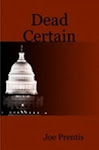
My New Novel Now Available On Amazon


It is always a thrill for an author when a new novel becomes available in the bookstores. This book is a change of pace for me because it involves a heinous crime. This book is not for the squeamish.

A phone call in the early hours of the morning shatters the tranquility of Sheriff Daniel Barrett's household when he finds out that the father of his fourteen-year-old daughter's best friend has been the victim of a brutal homicide. Viewing the body at the scene of the crime convinces Barrett that there is a monster loose in their town, and deranged killer is poised to strike again. Barrett is in a race against time with a lab full of evidence that seems to lead nowhere, and a growing suspicion that everything is more complicated than it seems.

Sunday, September 20, 2009

Librarians - what they have meant to me.


Tags: Librarian, books, reading, literature.

When I was in grammar school we had a librarian who run everything with quiet efficiency. She did not seem to be overly aware of the different students, and even the ones of us who haunted the library were just so many nameless children. At the beginning of the year, when I reached the eighth grade, I learned that we had a new librarian. Her name, according to the memo that circulated the first day at school, was Miss Curry. Before the end of the proceeding year, I had been placed on a ‘list’ in the library along with some other troublemakers. My problem was the fact that I was reading too many books, and someone in the school administration office decided that it wasn’t a good idea from an academic standpoint. I was limited to one book per week, and everything was checked against an approved reading list. I had read one of Jessie Stuart’s books, but was banned from reading the others until I reached high school. I had read all of the books on the grade school list, and was reading some of them for the second time.

When I made my first trip to the library, I decided I would be polite, introduce myself to Miss Curry, and use the same wily skills I had used on the previous librarian to convince her that I should be allowed to read Ben Hur. I waited until after lunch, gave myself a pep talk and tried to calm my nerves. I forced myself to the head of the line and entered the library. I came to a halt just inside the door, staring. Miss Curry saw my hesitation and came slowly toward me. Curry was incredibly old by my eighth grade standard, and had a striking resemblance, both in dress and appearance, to Minerva McGonagall, the headmistress at Harry Potter’s school at Hogwarts. I could feel my heart sinking. Her face was stern and unsmiling. She asked my name. I finally managed to tell her and saw her chin lift slightly. “Ah, yes,” she said. “I have you on my list.”

The other students in my eighth grade group quickly selected a book and went through the checkout procedure while I hunted frantically for something I hadn’t read. “Come here, young man,” she said. I was afraid to look directly at her but I did as she commanded. She led me down the stacks to one of the sections of wall shelves that had previously held some pieces of pottery and useless displays. She waved her hand at the rows of books then looked at me again. “This is part of my personal library,” she said. My eye quickly fell on Carl Sandberg’s biography of Abraham Lincoln. I ran my hand along the covers and could feel my fingers tingle. “These books belong to me, and they aren’t subject to the library checkout rules,” she said. “They are reserved for the more mature students . . . like yourself.”

This was the beginning of a personal and special relationship between us. Miss Curry was a published author, an avid reader, and personally acquainted with Carl Sandberg, Jessie Stuart, and William Faulkner. As I continued my efforts to write something worthwhile, Miss Curry became my most knowledgeable critic. Today, whenever I tackle a difficult writing project, I can still hear her gentle voice ringing in my ears. “Never give up, never give up, never give up . . .”

Sunday, September 13, 2009

Why Kids Like to Read


I arrived rather late to an Internet discussion about children’s books and what attracts children to a certain type of story. There was a general agreement that the younger ones were attracted as much by the colorful pictures as they were by the story. It is my personal feeling that a book won’t hold the attention of the younger ones unless it involves both.

I am one of those adults who is blessed (or cursed) with a memory that goes back into early childhood. I can still remember the spine-tingling anticipation of settling back and reading a story for the first (second, fifth, or the hundredth) time. It becomes even more interesting when I analyze my feeling and try to discover what it was that pulled me into that particular story. I think the real key to writing a good story is giving the child a sense of involvement. I have a vivid memory of reading Peter Rabbit for the first time and discovering that animals were ‘people’ in the world of literature. Our garden was only a short distance behind our house and the fence looked a great deal like the one in the story book. I also remember carrying my copy of Sammy Jay to the edge of the woods and looking up into the limbs, hoping that in some magical way I would be able to engage one of my feathered friends in conversation. There were slowly moving streams, wooded hilltops, and fields in my world, and I hoped to encounter the same kind of adventures that engaged Tom Sawyer, Huckleberry Finn, and the rest of their friends. Books were a magical portal I could step through and find adventuresome things among the commonplace.

Writers of children’s fiction are somewhat envious of J.K. Rowling’s Harry Potter series, but many of them are looking in the wrong place for the secret of her success. I did not understand it until I saw Rowling on television signing copies of her book. The children were lined up, each of them hugging a copy of Harry Potter as they slowly inched along. The camera focused on one little girl. When it came her turn, she slid the book across to Rowling who focused her full attention on what the little girl was saying. While the camera captured the incident in a very poigent fashion, I could not hear the earnest conversation. I have no doubt that Rowling was intently interested in what the little girl was saying. Unless we are still attuned to the child inside of us, what we write is likely to fall flat on the written page.

So what do children lack in their world that we can give to them in our stories? Adventure comes high on the list, and the second is respect. Did you notice how many people addressed Harry Potter as Sir? In today’s world, children are coddled and praised, but seldom respected. There is a subtle difference and good children’s literature must contain some of the latter if it is to be attuned to the proper wavelength. Children want a spell they can cast, a secret formula, a decoded map, a weapon—or any other kind of power that makes them feel special. They want to be recognized by adults for their achievements. They want to know that their effort made a difference.

Sunday, September 6, 2009

The Only Thing We Have to Fear, Is Fear Itself


It would be difficult to find a story where fear did not play an active role in the plot. Fear comes in many different forms depending on the story. Even if your novel involves a hardboiled hero who can face any kind of danger without flinching, the absence of fear in his behavior is nothing more than another manifestation of the same emotion. We know the fear is there, deep down where it matters, but our hero is able to control it in a way that is admirable.

One of the interesting things about fear is the fact that it doesn’t have to be earth shattering to interest the reader. What touches us most, a twenty car pileup on some distant stretch of Interstate, or the remembrance of loosing our breakfast on picture day when we were in the first grade? Fear must be upfront and personal if it is to have any effect on the reader. How do we accomplish this? Here are a few suggestion you might find interesting.

Make it realistic: If the frightening experience involves an injury, make sure you have your facts straight. Authors sometimes make the mistake of thinking that if one gunshot wound is exciting, then twenty will have a greater effect. In one action/adventure novel I read, the hero was shot a dozen times but still managed to remain on his feet until he had choked the villain to death. Oh, and I forgot to mention another amazing detail. He was laughing while he did it.

Make sure the fear is universal: I know a man who is afraid of all small animals. A cat will send him into a state of mind-numbing terror, and a small dog will make him wet his pants. There are a lot of irrational fears, but unless you do your groundwork and explain your character’s problem, your scene is likely to fall flat. Horror writers frequently make this mistake when they reveal the monster as nothing more than an oversized insect that could be dispatched with one swift blow with an overloaded purse. Find those things that frighten us all – a shadow outside a window, a phone ringing in the wee hours of the morning, or the intense attention of a stranger.

Make the reader want to do it himself: By the time we reach the confrontation near the end of the story, we need to be emotionally prepared to dispatch the villain in a very pleasing manner. You already know how to do this. Just think about the ways in which we are infused with righteous indignation while watching the early morning newscast. Some unknown group blew up a bridge in –what was the name of that place – and we can’t wait to tear out their throats. Revenge is a dish best served cold, the old adage advises. Make mine hot where I will feel the results of each blow and observe the wonderfully pleasing aftermath. I wouldn’t admit this to just anyone, but there is a desire for revenge in all of us. I know you need to get back to your story, so I am going to stretch out on the couch and wait. Give me something spine tingling this time around.